

Chemical Peels in Dubai
Acne · Post-Acne · Pigmentation · Texture
Chemical peels are professional dermatological treatments designed to create controlled exfoliation and renewal of the skin using carefully selected acids.
- Doctor-led assessment
- Acid selected to your skin
- 0 to 7 days downtime
- Medical-grade aftercare
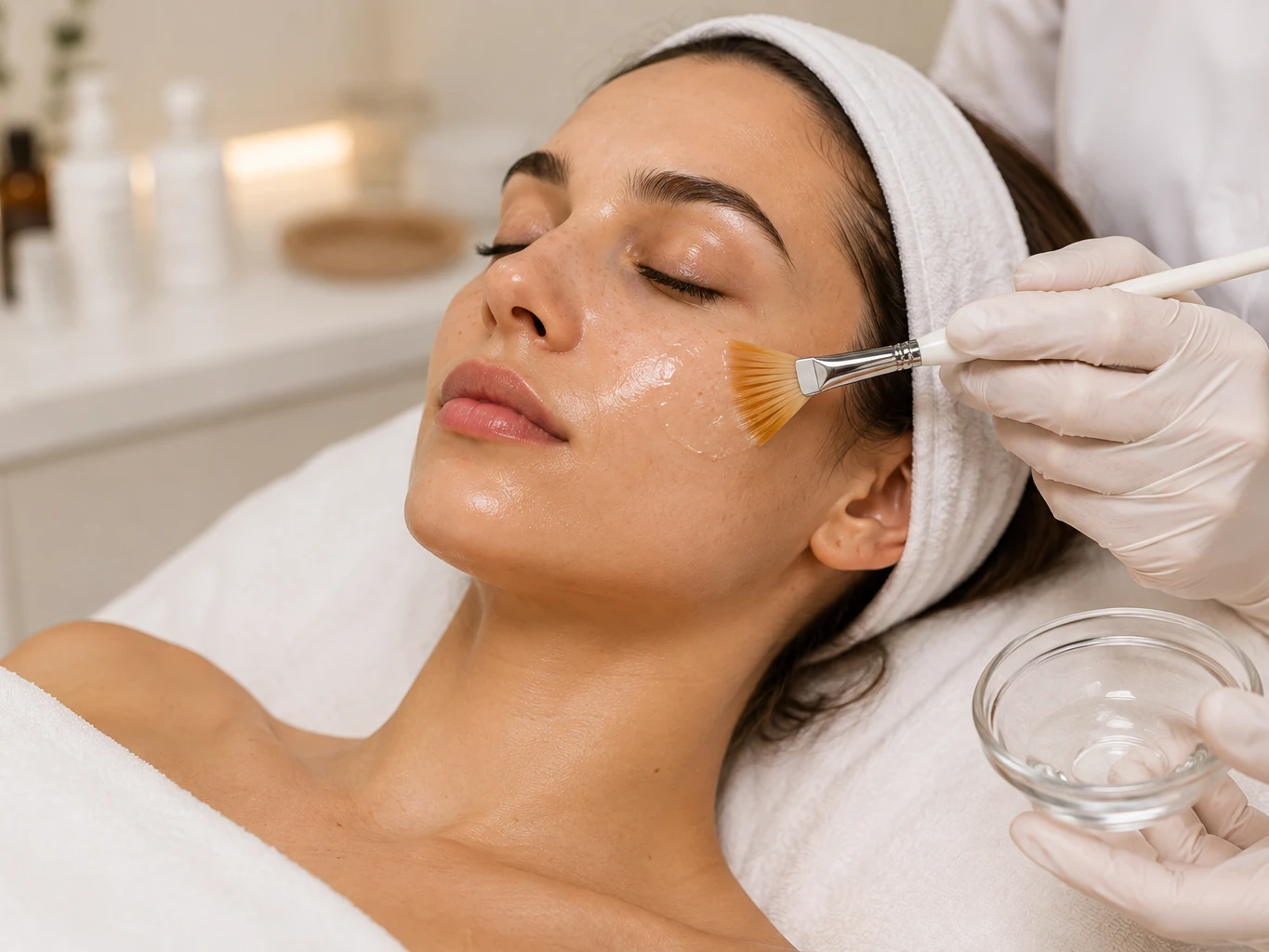
- Treatment time20-30 min
- Downtime0-7 days
- AnaesthesiaUsually none
- Back to work0-2 days
- SessionsIndividual
Treatment at a Glance
- Procedure Time
- Approximately 20–30 minutes
- Anaesthesia
- Usually not required
- Downtime
- Approximately 0–7 days depending on peel depth
- Back to Work
- Often immediately or within 1–2 days after superficial peels
- Treatment Course
- Individually prescribed
- Treatment Areas
- Face and selected body areas depending on indication
- Results
- Progressive improvement throughout the treatment course
What Can Chemical Peels Treat?
Targeted support for common skin concerns
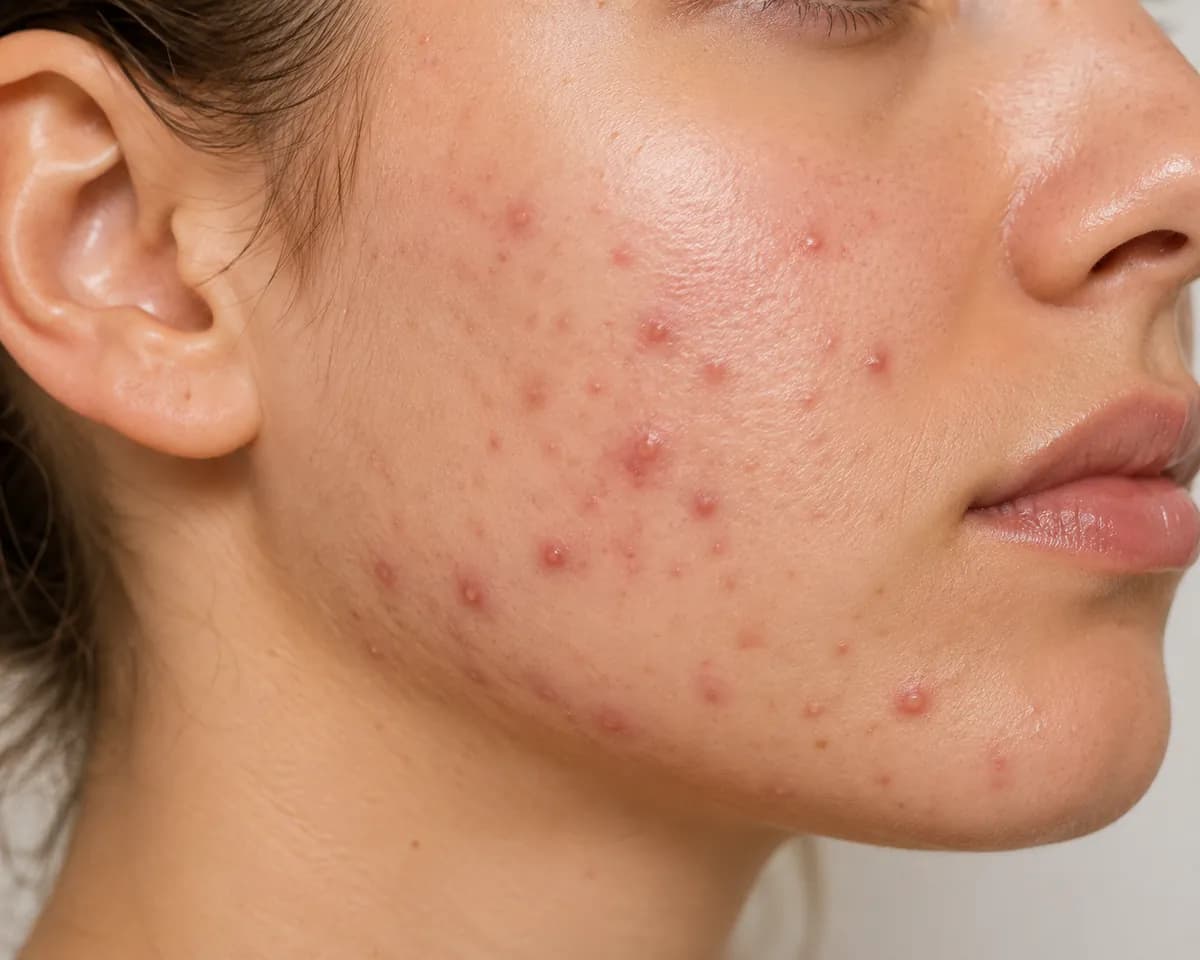
Acne
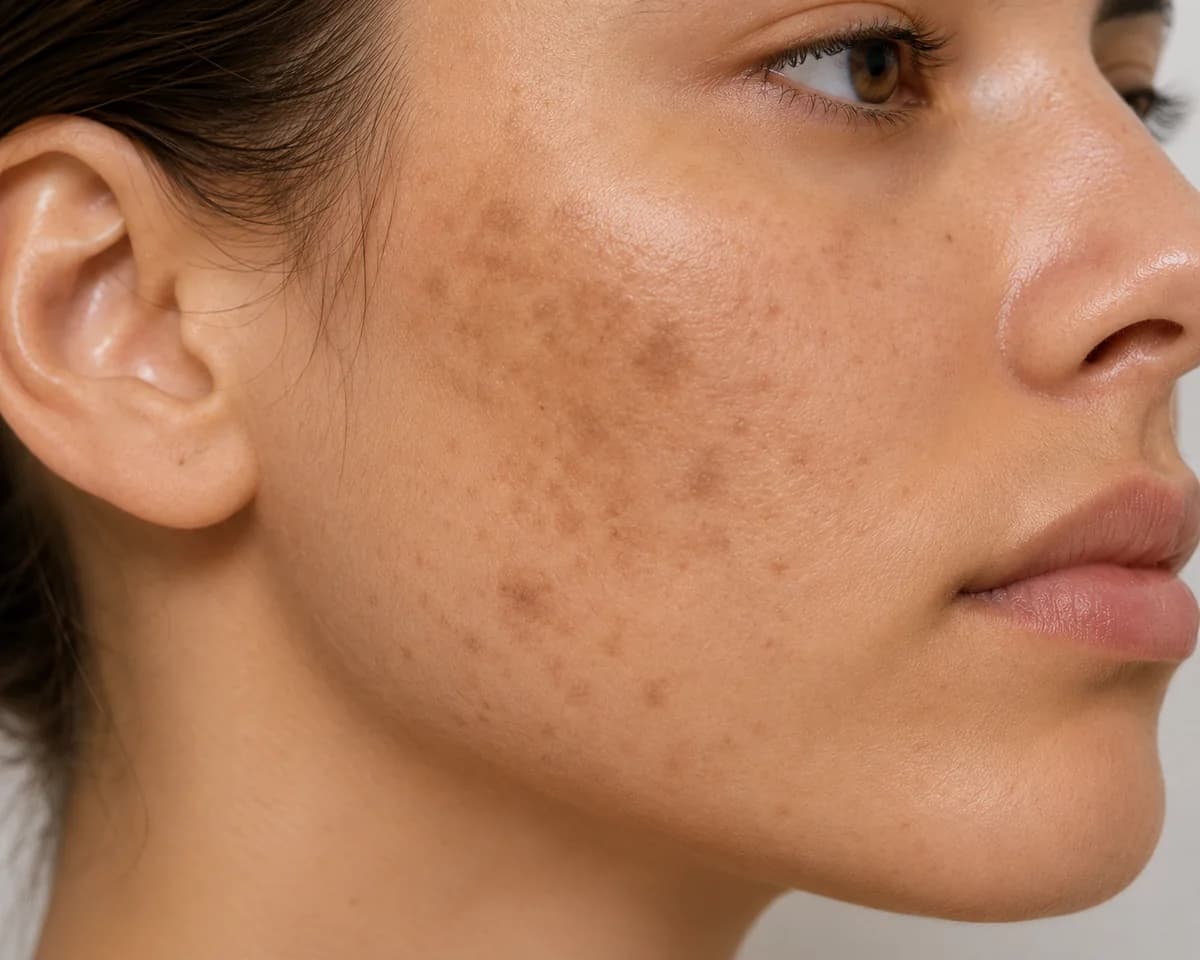
Pigmentation
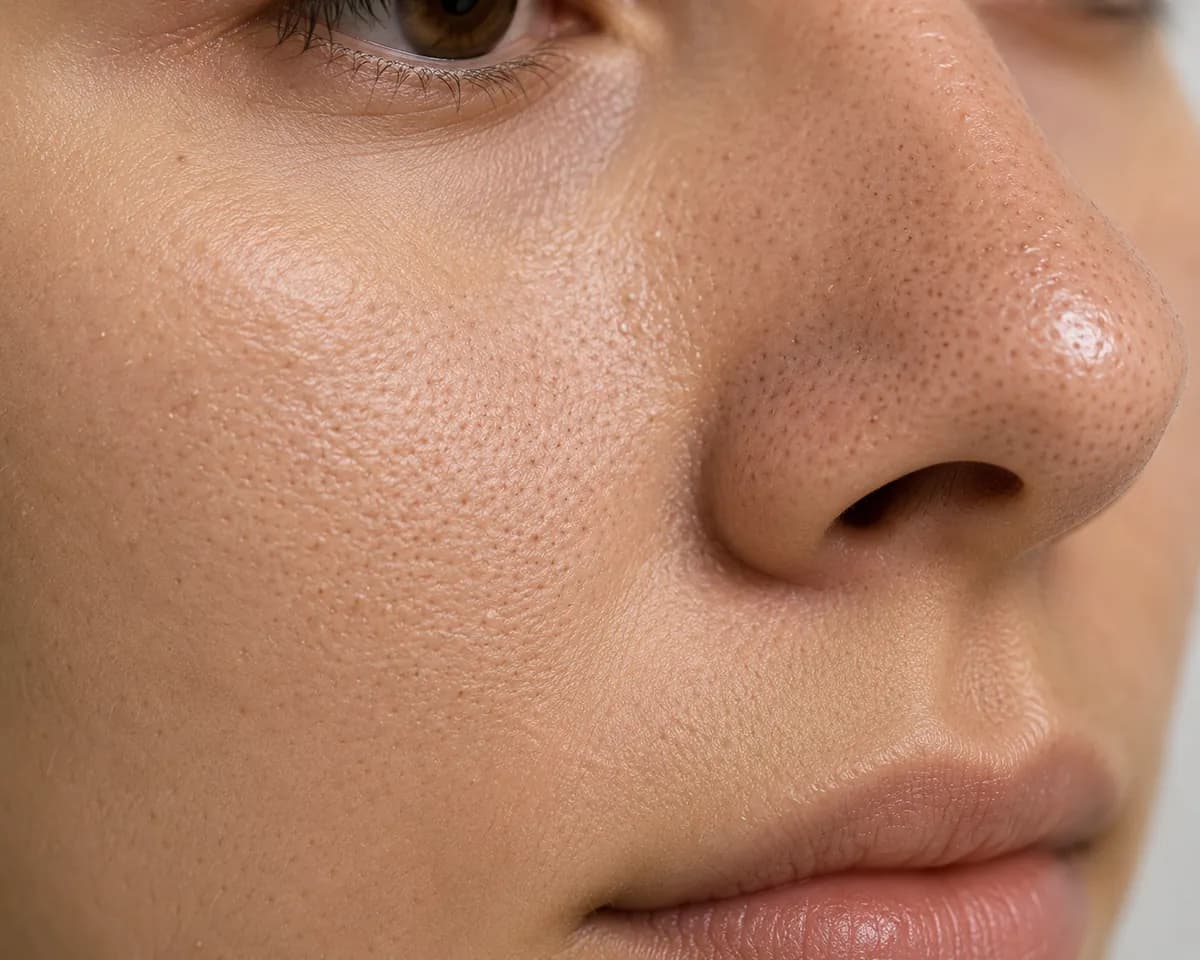
Clogged Pores
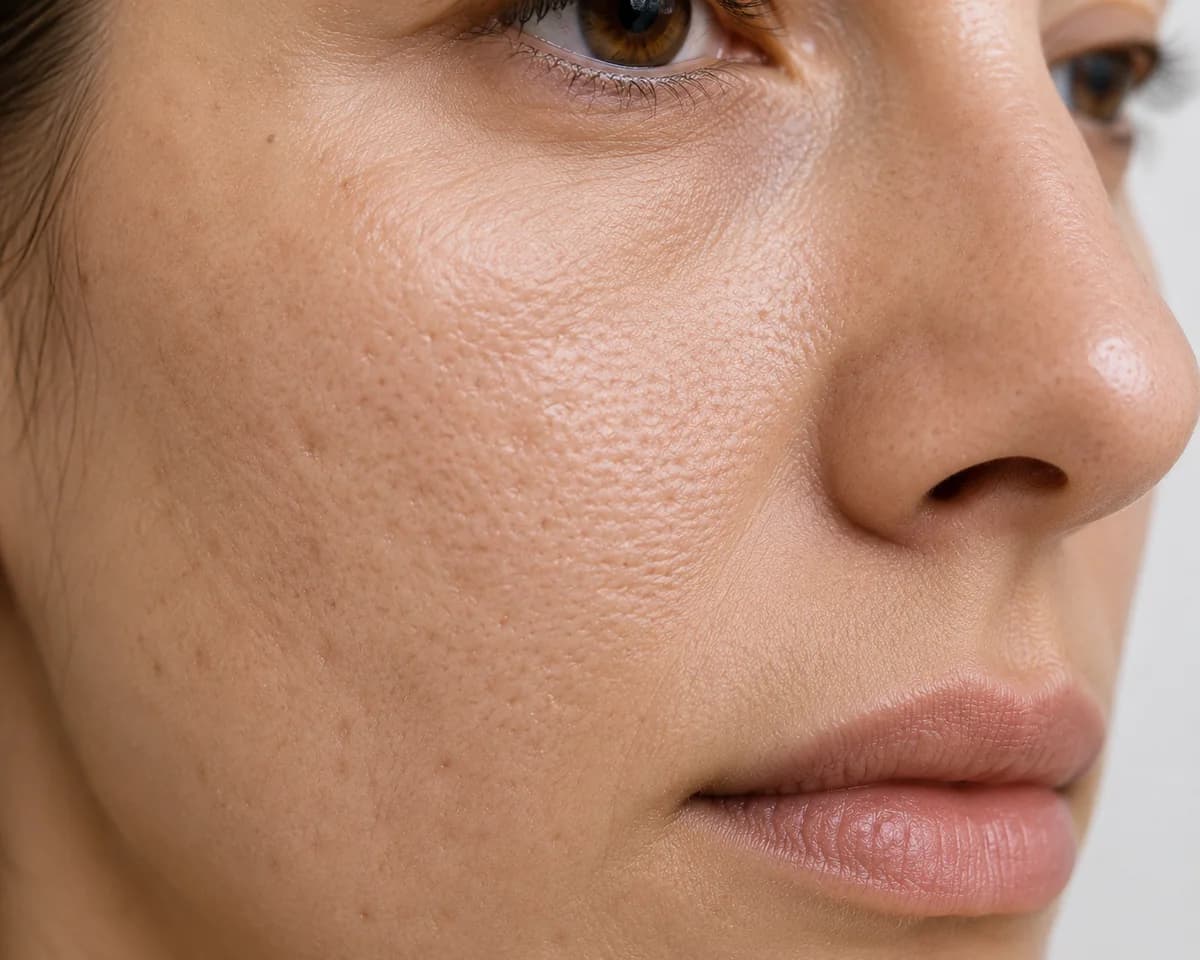
Uneven Texture
Active Acne • Comedonal Acne • Blackheads & Whiteheads • Clogged Pores • Excessive Oiliness • Post-Acne Marks • Post-Inflammatory Hyperpigmentation (PIH) • Uneven Skin Tone • Dull Skin • Rough or Uneven Texture • Superficial Post-Acne Changes
Active acne, post-acne pigmentation and true acne scars are different conditions.
Correct diagnosis determines which treatment strategy should be used.
Types of Chemical Peels
There is no single acid that is appropriate for every patient. Different peeling agents have different properties and are selected according to the patient’s diagnosis, skin phototype, sensitivity and treatment goals.
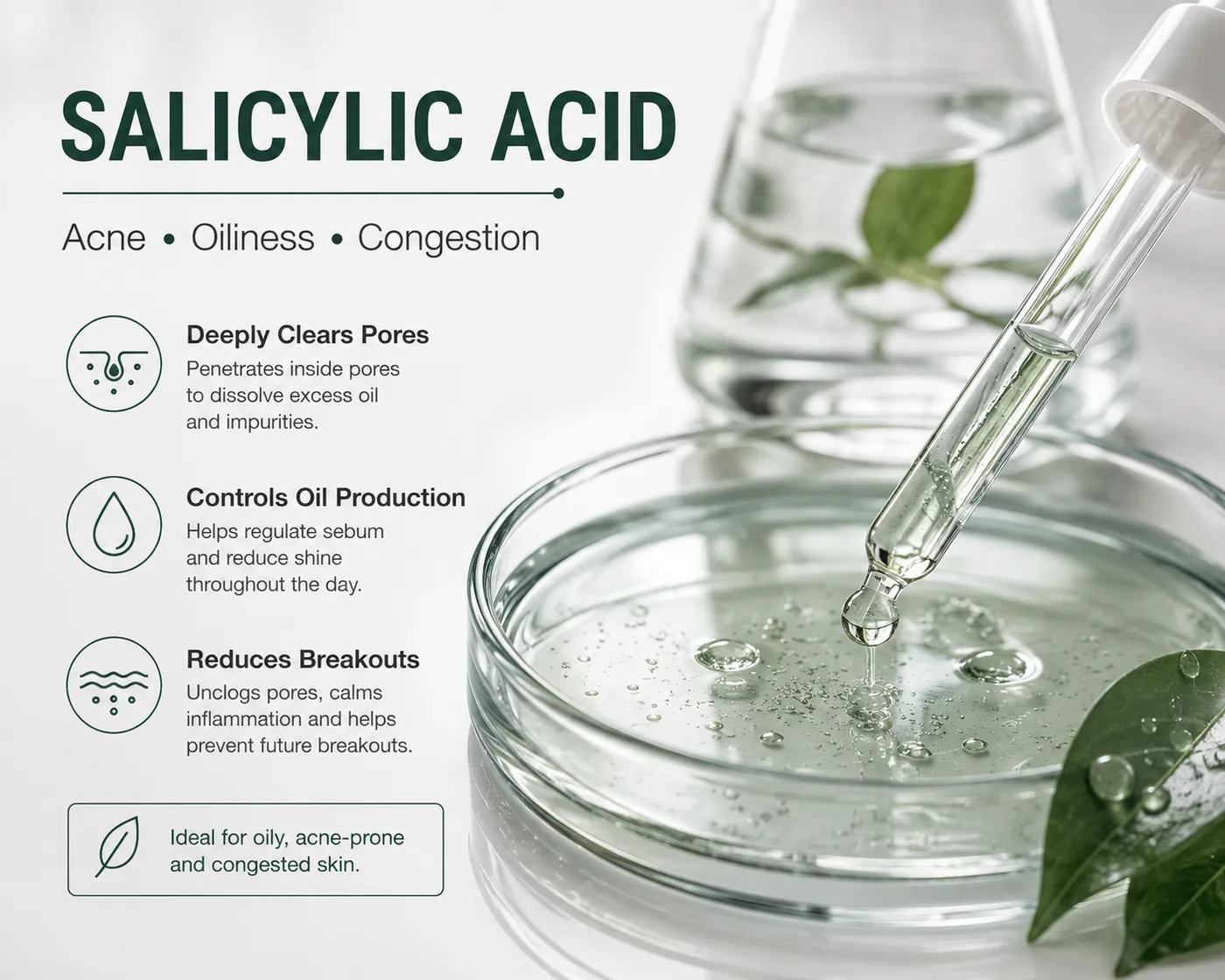
Salicylic Acid
A beta-hydroxy acid commonly used for oily, congested and acne-prone skin. It may be particularly useful for: Blackheads • Whiteheads • Comedonal Acne • Clogged Pores • Excess Surface Oil • Acne-Prone Skin
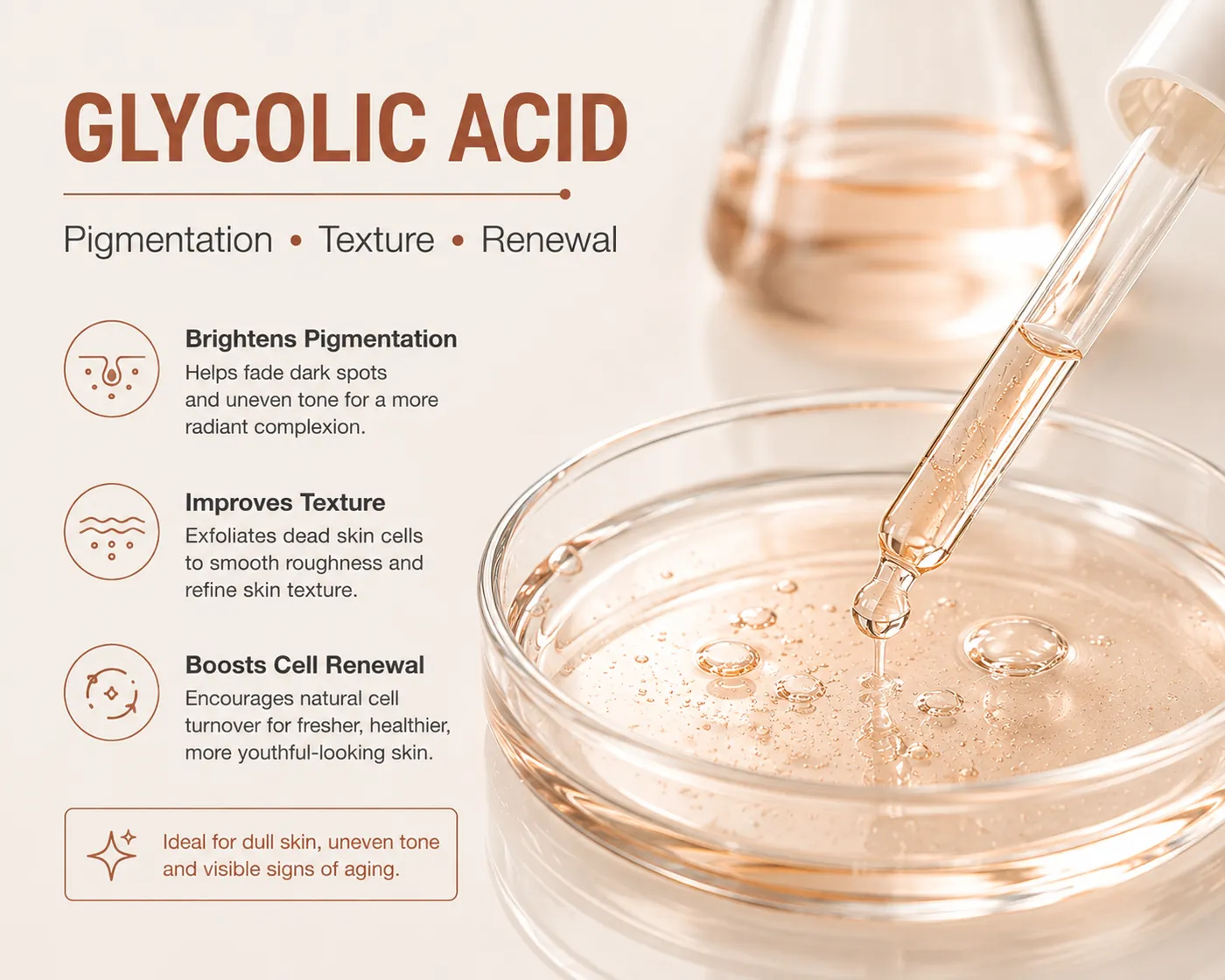
Glycolic Acid
An alpha-hydroxy acid commonly used to support epidermal renewal and improve: Uneven Skin Tone • Superficial Pigmentation • Dullness • Rough Texture • Selected Post-Acne Marks
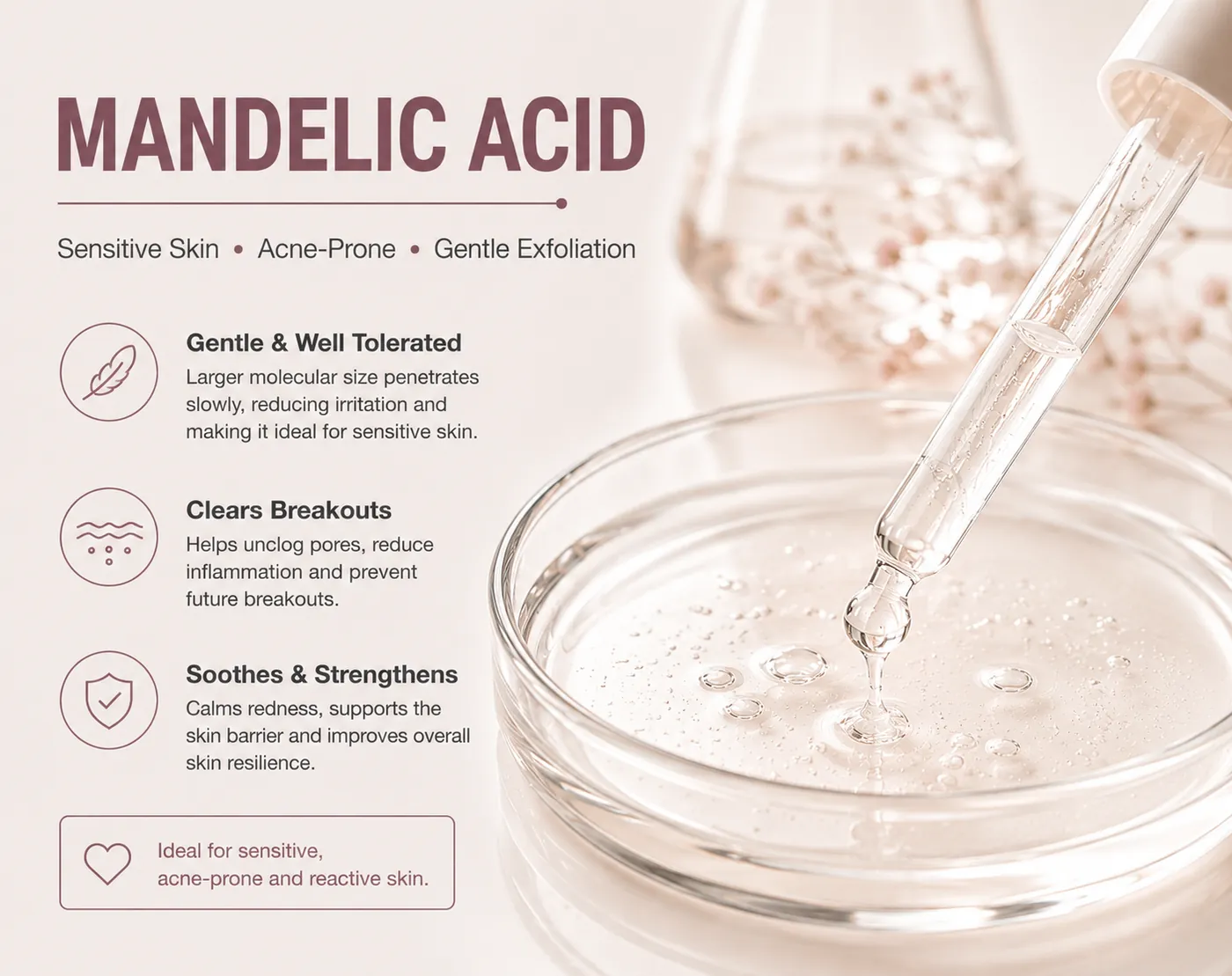
Mandelic Acid
An alpha-hydroxy acid that may be selected when a more gradual approach to exfoliation is appropriate. It may be incorporated into programmes for: Acne-Prone Skin • Congestion • Uneven Skin Tone • Post-Inflammatory Pigmentation • Skin Texture
- In selected patients, combinations of peeling agents may be used to address several skin concerns simultaneously.
- The peel type, acid selection and depth are personalised after skin assessment.
- The treatment is selected according to the condition of the skin — not according to which peel is considered the “strongest.”
What Happens During a Chemical Peel?
Medical Skin Assessment
The skin is assessed for acne activity, congestion, pigmentation, phototype, sensitivity, barrier condition and recent treatments.
Skin Preparation
The treatment area is cleansed and appropriately prepared.
Peel Selection
The peeling agent, concentration and treatment protocol are selected according to the clinical indication.
Controlled Application
The peel is applied for the appropriate treatment period while the skin response is monitored.
Post-Peel Care
The skin is reassessed and individual aftercare and photoprotection instructions are provided.
Assess → Select → Apply → Monitor → Recover
Chemical Peel Recovery & Downtime
- Superficial Peels
- Temporary reactions may include: Redness • Tightness • Dryness • Mild Flaking • Temporary Sensitivity
- Some patients experience little visible peeling and can return to normal daily activities quickly.
- More Active Peeling
- More noticeable dryness, flaking or peeling may develop over the following days.
- Visible peeling is not required for a chemical peel to have a biological effect.
- The objective is controlled treatment — not maximum visible shedding.
Recovery varies according to peel type and depth.
Possible Side Effects & Risks
Temporary reactions can include: Redness • Dryness • Tightness • Flaking • Peeling • Sensitivity • Temporary Irritation
Other adverse effects may include: Prolonged Redness • Post-Inflammatory Hyperpigmentation • Hypopigmentation • Crusting • Blistering • Infection • Scarring
The risk depends on peel depth, acid, concentration, skin phototype, sun exposure, aftercare and individual response.
Read more about chemical peels
Chemical peels are professional dermatological treatments designed to create controlled exfoliation and renewal of the skin using carefully selected acids.
The type, combination, concentration and depth of the chemical peel are selected individually according to the patient’s skin condition, phototype, acne activity, pigmentation, sensitivity and treatment goals.
For acne and post-acne concerns, chemical peeling can be incorporated into a comprehensive medical treatment plan to improve comedonal acne, congestion, excessive oiliness, post-inflammatory pigmentation and superficial textural irregularities.
What Is a Chemical Peel?
A chemical peel involves the controlled application of an exfoliating solution to the skin.
Depending on the formulation, concentration and treatment protocol, chemical peels can work at different levels of the epidermis and, in selected medical protocols, deeper layers of the skin.
The objective is not simply to remove the superficial layer of the skin.
Chemical peeling creates controlled skin renewal, helping regulate keratinisation, improve clogged pores, reduce superficial pigmentation and support a smoother, more even skin surface.
For acne-prone skin, chemical peeling may help reduce the accumulation of dead skin cells within the follicles and improve congestion.
For post-acne concerns, selected peels can gradually improve residual pigmentation and uneven skin tone.
What Can Chemical Peels Treat?
Active Acne • Comedonal Acne • Blackheads & Whiteheads • Clogged Pores • Excessive Oiliness • Post-Acne Marks • Post-Inflammatory Hyperpigmentation (PIH) • Uneven Skin Tone • Dull Skin • Rough or Uneven Texture • Superficial Post-Acne Changes
Active acne, post-acne pigmentation and true acne scars are different conditions.
Correct diagnosis determines which treatment strategy should be used.
Chemical Peels for Active Acne
Selected chemical peels may be incorporated into acne treatment to help reduce follicular congestion, improve comedones and support more balanced skin renewal.
- Unclogging Porescontrolled exfoliation helps reduce the accumulation of keratinised cells within the follicle.
- Reducing Comedoneschemical peeling can be particularly useful for skin with blackheads, whiteheads and comedonal acne.
- Managing Excessive Oilinessselected peeling agents may help manage oily and seborrhoeic skin as part of a broader acne-treatment programme.
- Supporting Medical Acne Treatmentchemical peeling can complement an individually prescribed acne treatment plan.
However, chemical peeling does not replace medical acne treatment when prescription therapy or other medical treatments are indicated.
Chemical Peels for Post-Acne Pigmentation
After an inflammatory acne lesion resolves, it may leave a flat brown or grey-brown mark known as post-inflammatory hyperpigmentation (PIH).
These marks are different from acne scars.
Chemical peels can support controlled epidermal renewal and gradually reduce excess pigmentation, helping create a more even skin tone.
Post-Acne Marks vs Acne Scars
- POST-ACNE PIGMENTATIONFlat brown, grey or dark marks remaining after inflammation. Chemical peeling may be particularly useful as part of their treatment.
- POST-ACNE SCARSStructural changes within the skin, including ice-pick scars, boxcar scars, rolling scars and atrophic scars.
Superficial chemical peeling alone cannot completely correct deeper structural acne scars. Depending on the type and depth of scarring, treatment may require RF microneedling, resurfacing technologies, microneedling, regenerative treatments or other scar-specific procedures. At Pearl Skin Polyclinic, we first identify the type of post-acne changes present before creating a treatment programme.
How Do We Choose the Right Chemical Peel?
Before treatment, our medical team evaluates: Type & Severity of Acne • Active Inflammation • Comedones & Congestion • Sebum Production • Post-Inflammatory Pigmentation • Skin Phototype • Skin Sensitivity • Skin Barrier Condition • Current Skincare • Prescription Medications • Previous Procedures • History of Pigmentation • Recent Sun Exposure
This assessment is particularly important in Dubai, where patients represent a wide range of skin phototypes and year-round sun exposure needs to be considered when planning treatment.
The safest and most effective peel is not necessarily the strongest peel — it is the one selected for the patient's skin and clinical concern.
Chemical Peels for Different Skin Phototypes
Skin phototype is an important factor when planning chemical peeling.
Patients with higher Fitzpatrick skin phototypes may have a greater tendency to develop post-inflammatory hyperpigmentation following excessive irritation or inflammation.
This does not mean that chemical peels cannot be performed on darker skin.
It means that peel selection, concentration, contact time, treatment depth, skin preparation, aftercare and sun protection need to be considered carefully.
Chemical Peels for Blackheads & Clogged Pores
Blackheads and whiteheads develop when sebum and keratin accumulate within follicles.
Chemical peeling may help regulate surface keratinisation and reduce follicular build-up.
This can make peels particularly useful for: Blackheads • Closed Comedones • Clogged Pores • Oily Congested Skin
Persistent comedonal acne may also require appropriate medical skincare or prescription treatment.
Removing existing congestion is only one part of preventing new comedones from forming.
Chemical Peels for Oily Skin
Oily skin does not need to be aggressively stripped or dried.
Selected chemical peels may help manage: Excess Surface Oil • Follicular Congestion • Comedones • Uneven Texture as part of a broader acne-management strategy.
Treatment should balance exfoliation with appropriate barrier support.
Chemical Peels for Post-Inflammatory Hyperpigmentation
Post-inflammatory hyperpigmentation, or PIH, is a common concern after acne.
It appears as flat brown, grey-brown or darker marks where inflammation previously occurred.
Chemical peeling may support progressive epidermal renewal and improve selected superficial pigmentation.
However, excessive irritation can itself trigger additional PIH in susceptible skin.
This is particularly important in patients with darker skin phototypes.
Pigmentation treatment should reduce inflammation — not create more of it.
Chemical Peels for Face & Body Acne
Acne and post-inflammatory pigmentation can occur beyond the face.
Depending on the indication, chemical peeling may be considered for: Face • Chest • Shoulders • Upper Back • Back
Body skin differs from facial skin in thickness, sebaceous activity and sensitivity.
The peel formulation and protocol should therefore be selected according to the anatomical area.
Chemical Peel vs HydraFacial
Chemical Peels use selected acids to create controlled chemical exfoliation and skin renewal.
HydraFacial Syndeo™ combines cleansing, exfoliation, vortex extraction and hydration.
HydraFacial may be particularly useful when surface congestion and extraction are important.
A chemical peel may be selected when controlled acid exfoliation is more appropriate for: Comedones • Oiliness • Superficial Pigmentation • Uneven Skin Tone • Epidermal Renewal
Chemical Peel vs Forever Clear BBL®
Forever Clear BBL® is a light-based protocol primarily incorporated into treatment programmes for selected inflammatory acne and acne-related redness.
Chemical Peels may be particularly useful when comedonal acne, clogged pores, oiliness, post-inflammatory pigmentation and superficial texture are important components.
The appropriate treatment depends on which component of acne is dominant.
Chemical Peels vs Morpheus8 for Acne Scars
Superficial chemical peels primarily work at the level of controlled epidermal renewal.
Morpheus8 RF microneedling creates fractional treatment at selected tissue depths and may be considered for appropriate structural acne scars.
The correct treatment depends on whether the concern is: Pigmentation • Redness • Surface Texture • Active Acne • Structural Scarring
Who Are Chemical Peels For?
Chemical peeling may be considered for selected patients concerned about:
- Comedonal Acneblackheads, whiteheads and follicular congestion.
- Oily & Congested Skinwhen controlled exfoliation is appropriate.
- Post-Acne Marksparticularly selected superficial post-inflammatory pigmentation.
- Uneven Skin Tonewhen epidermal pigment irregularity contributes to the concern.
- Dull Skinwhen surface build-up contributes to reduced radiance.
- Rough or Uneven Textureselected superficial textural changes.
- Body Acne & Post-Acne Pigmentationin appropriate areas following assessment.
What Does a Chemical Peel Feel Like?
Sensation depends on the acid, concentration and depth of treatment.
Patients may experience: Tingling • Warmth • Mild Stinging • Temporary Tightness
Anaesthesia is generally not required for superficial chemical peels.
Chemical Peel Aftercare
Patients may be advised to temporarily avoid: Retinoids • Strong Acids • Scrubs • Aggressive Exfoliation • Sauna • Steam Rooms • Excessive Heat • Picking or Peeling the Skin Manually
Broad-spectrum sun protection is particularly important.
Do not pull or remove peeling skin. Allow it to shed naturally.
Chemical Peels & Sun Exposure in Dubai
Sun exposure is especially important when performing chemical peels for pigmentation.
Following exfoliation, the skin may be more vulnerable to irritation and pigmentary changes.
Recent significant sun exposure or tanning may influence treatment planning.
This is particularly important for patients prone to PIH.
A pigmentation treatment without appropriate sun protection can undermine the treatment strategy.
When Will I See Results?
Chemical peel results are generally progressive.
Depending on the indication, patients may notice improvement in: Congestion • Surface Smoothness • Oiliness • Post-Acne Pigmentation • Uneven Skin Tone • Overall Skin Appearance
Acne and pigmentation should be assessed across the treatment course rather than judging the result after one peel.
How Many Chemical Peels Will I Need?
There is no universal number of treatments appropriate for every patient.
The recommended course depends on: Acne Type • Degree of Congestion • Pigmentation • Skin Phototype • Peel Selected • Skin Sensitivity • Other Acne Treatments • Individual Response
Some patients may require a series of superficial peels.
Others may use chemical peeling periodically within a broader acne or pigmentation programme.
Can Chemical Peels Be Combined with Other Acne Treatments?
Depending on the type and stage of acne, a personalised programme may include: Medical Skincare • Prescription Acne Treatment • HydraFacial • Medical Facial Cleansing • Forever Clear BBL® • HELEO4™ • BBL HEROic™ • Morpheus8 for Appropriate Scarring
These treatments address different components of acne and post-acne changes.
The sequence should be selected according to the condition of the skin.
When a Chemical Peel May Not Be the Right Treatment
Another treatment may be required when the dominant problem is: Severe Inflammatory Acne • Nodules or Cysts • Deep Atrophic Acne Scars • Significant Vascular Redness • Deep Pigmentation • Active Skin Infection • Severely Compromised Skin Barrier • Undiagnosed Skin Lesions
Chemical Peel Consultation in Dubai
At Pearl Skin Polyclinic in Dubai, chemical peeling begins with determining which component of acne or post-acne change we are treating.
We assess active inflammation, comedones, congestion, oiliness, pigmentation, skin phototype, sensitivity, skincare and previous treatment.
The acid, concentration, combination and treatment depth are then selected individually.
For some patients, a salicylic acid peel may be appropriate. For others, glycolic acid, mandelic acid, a combination peel or another acne treatment may be more suitable.
The goal is not the strongest peel or the most visible peeling. The goal is controlled treatment matched to the patient's skin and clinical concern.
Often Combined With
Frequently Asked Questions
Selected chemical peels may be incorporated into acne treatment to help reduce follicular congestion, improve comedones and support more balanced skin renewal. However, chemical peeling does not replace medical acne treatment when prescription therapy or other medical treatments are indicated.
Active acne, post-acne pigmentation and true acne scars are different conditions. Superficial chemical peeling alone cannot completely correct deeper structural acne scars. Depending on the type and depth of scarring, treatment may require RF microneedling, resurfacing technologies, microneedling, regenerative treatments or other scar-specific procedures. At Pearl Skin Polyclinic, we first identify the type of post-acne changes present before creating a treatment programme.
There is no universal number of treatments appropriate for every patient. The recommended course depends on: Acne Type • Degree of Congestion • Pigmentation • Skin Phototype • Peel Selected • Skin Sensitivity • Other Acne Treatments • Individual Response
Some patients experience little visible peeling and can return to normal daily activities quickly. More noticeable dryness, flaking or peeling may develop over the following days. Temporary reactions may include: Redness • Tightness • Dryness • Mild Flaking • Temporary Sensitivity
There is no single acid that is appropriate for every patient. Different peeling agents have different properties and are selected according to the patient’s diagnosis, skin phototype, sensitivity and treatment goals. The treatment is selected according to the condition of the skin — not according to which peel is considered the “strongest.”
This assessment is particularly important in Dubai, where patients represent a wide range of skin phototypes and year-round sun exposure needs to be considered when planning treatment. It means that peel selection, concentration, contact time, treatment depth, skin preparation, aftercare and sun protection need to be considered carefully. Broad-spectrum sun protection is particularly important.
